

- September 9, 2026
- drishti gupta
- Comment: 0
- Laparoscopic Surgery
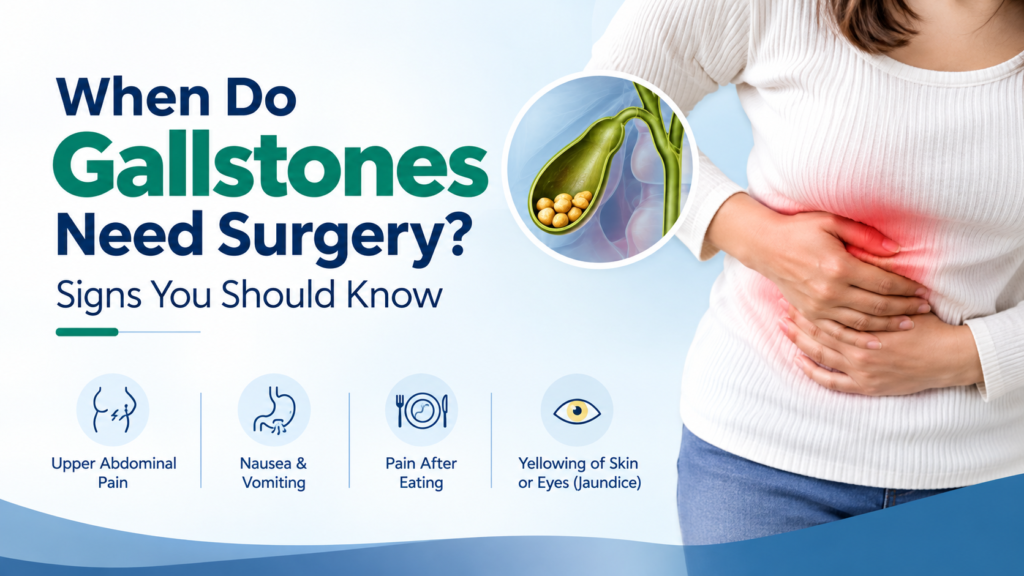
Gallstones are hard, stone-like deposits that can form inside the gallbladder. Some people have gallstones without experiencing any symptoms, while others may develop severe abdominal pain, nausea, vomiting or other complications.
If you have been diagnosed with gallstones, one of the most common questions is:
“Do I need surgery?”
The answer depends on whether your gallstones are causing symptoms or complications. Not everyone with gallstones needs surgery, but symptomatic or complicated gallstones may require treatment.
What Are Gallstones?
The gallbladder is a small, pear-shaped organ located beneath the liver. It stores bile, a digestive fluid that helps the body digest fats. Gallstones can develop when substances in bile, such as cholesterol or bilirubin, become imbalanced and form solid particles. Gallstones can vary in size—from tiny grains to stones several centimeters in diameter. Some people have “silent” gallstones, which do not cause symptoms and may not require treatment.
When Do Gallstones Need Surgery?
Surgery is generally considered when gallstones cause repeated symptoms or complications.The most common treatment for symptomatic gallstones is laparoscopic cholecystectomy, a minimally invasive procedure to remove the gallbladder.
Your doctor may recommend surgery if you experience:
1. Repeated Gallstone Attacks
One of the most common symptoms of gallstones is biliary colic a sudden or intense pain caused when a gallstone blocks the flow of bile.
The pain may occur:
-
- In the upper right abdomen
-
- In the upper middle abdomen
-
- After eating, particularly after a fatty meal
-
- At night
-
- Along with nausea or vomiting
If these attacks keep happening, your doctor may recommend gallbladder removal to prevent further episodes.
2. Severe or Persistent Abdominal Pain
Gallstone-related pain can sometimes become severe or last longer than a typical gallstone attack.Persistent or worsening pain may indicate inflammation or another complication and should be medically evaluated.
Do not assume that severe abdominal pain is simply “gas” or indigestion.
3. Acute Cholecystitis
A gallstone can become lodged and cause inflammation of the gallbladder, known as acute cholecystitis.
Symptoms may include:
-
- Persistent pain in the upper right abdomen
-
- Fever
-
- Nausea or vomiting
-
- Tenderness over the abdomen
-
- Feeling unwell
Acute cholecystitis may require hospital treatment and, in many cases, surgery to remove the gallbladder.
4. Gallstones in the Common Bile Duct
Sometimes a gallstone moves out of the gallbladder and becomes lodged in the common bile duct.
This can obstruct the flow of bile and may cause:
-
- Yellowing of the skin or eyes (jaundice)
-
- Dark urine
-
- Pale stools
-
- Abdominal pain
-
- Fever or chills
A blocked bile duct can become serious and require prompt medical assessment.Depending on the situation, a procedure called ERCP (endoscopic retrograde cholangiopancreatography) may be used to remove a stone from the bile duct, followed by gallbladder surgery when appropriate.
5. Gallstone Pancreatitis
A gallstone can sometimes block the drainage pathway of the pancreas and trigger acute pancreatitis.
Symptoms can include:
-
- Severe upper abdominal pain
-
- Pain spreading toward the back
-
- Nausea and vomiting
-
- Fever
-
- Abdominal tenderness
Gallstone pancreatitis can be serious and generally requires hospital evaluation and treatment.
What Are the Warning Signs of Gallstones?
Gallstones may cause symptoms when they block the normal flow of bile.
Common symptoms include:
-
- Sudden or intense upper abdominal pain
-
- Pain on the right side below the ribs
-
- Pain that may spread to the back or right shoulder
-
- Nausea
-
- Vomiting
-
- Bloating or indigestion after meals
Some people may experience symptoms after eating a heavy or fatty meal.
However, abdominal pain can have many causes. A proper medical evaluation is important before assuming that gallstones are responsible.
When Are Gallstones an Emergency?
Seek urgent medical attention if you have gallstone symptoms along with:
-
- Severe or persistent abdominal pain
-
- Fever or chills
-
- Yellow skin or eyes
-
- Repeated vomiting
-
- Dark urine or unusually pale stools
-
- Severe weakness or feeling very unwell
These symptoms may indicate complications such as gallbladder inflammation, bile duct obstruction or pancreatitis.
Do All Gallstones Require Surgery?
No.
If gallstones are discovered incidentally and do not cause symptoms, treatment may not be necessary in many cases. Your doctor may recommend observation and follow-up rather than immediate surgery. However, if gallstones are causing repeated attacks, inflammation, bile duct problems or other complications, surgery may be recommended.
The decision depends on your symptoms, examination, imaging findings and overall health.
What Is Laparoscopic Gallbladder Surgery?
The most common surgical treatment for symptomatic gallstones is laparoscopic cholecystectomy. Instead of making one large abdominal incision, the surgeon generally makes several small incisions and uses a camera and specialized instruments to remove the gallbladder.
Potential benefits of laparoscopic surgery can include:
-
- Smaller incisions
-
- Less postoperative discomfort compared with open surgery
-
- Shorter hospitals stay in appropriate cases
-
- Faster return to normal activities for many patients
However, the suitability of laparoscopic surgery depends on the individual patient’s condition. In some situations, open surgery may be required.
Can You Live Without a Gallbladder?
Yes.
The gallbladder stores bile, but it is not essential for digestion. After gallbladder removal, bile continues to flow from the liver into the digestive system. Most people can return to their usual diet and activities after recovery, although some individuals may experience temporary digestive changes. Your doctor will provide specific dietary and recovery advice after surgery.
Can Gallstones Be Treated Without Surgery?
Treatment depends on whether the stones are causing symptoms or complications.For people with asymptomatic gallstones, doctors may recommend observation rather than treatment.
If symptomatic gallstones are present, surgery is commonly the definitive treatment because simply removing or dissolving stones may not prevent new stones from developing in the gallbladder.
Your surgeon will discuss the most appropriate option based on your condition.
How Are Gallstones Diagnosed?
If gallstones are suspected, your doctor may recommend:
Ultrasound
An abdominal ultrasound is commonly used to look for gallstones and assess the gallbladder.
Blood Tests
Blood tests may help identify signs of inflammation, infection or problems involving the liver and bile ducts.
Additional Imaging
Depending on your symptoms and initial findings, your doctor may recommend additional imaging or specialized tests.
Frequently Asked Questions
Can gallstones go away on their own?
Gallstones generally do not simply disappear. If they are not causing symptoms, your doctor may recommend monitoring rather than treatment.
Can I have gallstones without pain?
Yes. Many people have gallstones without noticeable symptoms. These are often called silent gallstones.
What does gallstone pain feel like?
Gallstone pain is often felt in the upper right or upper middle abdomen. It can be intense and may sometimes spread toward the back or right shoulder.
Is gallbladder surgery safe?
Laparoscopic gallbladder removal is a commonly performed operation. However, like any surgery, it carries potential risks. Your surgeon can explain the expected benefits and risks based on your individual health.
Can gallstones come back after gallbladder removal?
Once the gallbladder has been removed, gallstones cannot form inside it. However, stones can occasionally be present or develop in the bile ducts, which is a different situation.
Do I need surgery if I have gallstones but no symptoms?
Not necessarily. People with asymptomatic gallstones often do not need immediate treatment. Your doctor can determine whether monitoring or treatment is appropriate for you.
Conclusion
Not every gallstone requires surgery. If gallstones are not causing symptoms, your doctor may recommend observation. But repeated painful attacks, gallbladder inflammation, bile duct obstruction or gallstone-related pancreatitis may require medical or surgical treatment.
If you have been experiencing recurrent abdominal pain, nausea after meals or other symptoms associated with gallstones, don’t ignore them.
A timely evaluation can help identify the cause of your symptoms and determine whether you need monitoring, medication, a procedure or surgery.
Gallstones Don’t Always Need Surgery. But When Symptoms Strike, Don’t Ignore Them.
This article is intended for general educational purposes and does not replace professional medical advice, diagnosis or treatment.
Reviewed by Dr. Tanuj Singla
MBBS, MS (AIIMS Rishikesh)
Ex-Senior Resident, PGI Chandigarh
Consultant Laparoscopic Surgeon

Leave feedback about this