Advanced Regenerative Treatments for Pain Relief & Faster Healing
At Guardian Hospital, our Orthobiologics Department specializes in advanced regenerative therapies that help the body repair damaged tissues naturally. Orthobiologics use biologically active substances derived from the patient’s own body to promote healing, reduce inflammation, and improve joint and soft tissue function.
Our minimally invasive treatments are designed for patients suffering from joint pain, sports injuries, tendon disorders, ligament injuries, and early-stage arthritis. By utilizing cutting-edge regenerative medicine, our specialists create personalized treatment plans to help patients regain mobility and improve their quality of life.
Stem Cell Therapy
What is Stem Cell Therapy?
Stem Cell Therapy is an advanced regenerative treatment that uses stem cells—typically obtained from the patient’s own bone marrow or adipose (fat) tissue—to support the body’s natural healing processes. These cells have the ability to develop into different tissue types and release signaling molecules that may aid tissue repair.
Stem Cell Therapy is considered for selected orthopedic conditions after a thorough clinical evaluation. Suitability depends on the patient’s diagnosis, overall health, and treatment goals.
Indications
Stem Cell Therapy may be considered for:
-
Early to moderate osteoarthritis
-
Cartilage injuries
-
Tendon injuries
-
Ligament injuries
-
Sports injuries
-
Delayed healing in selected musculoskeletal conditions
-
Chronic joint pain in appropriately selected patients
Benefits
-
Supports the body’s natural healing response
-
May help reduce pain and inflammation
-
May improve joint function and mobility
-
Minimally invasive treatment
-
Uses the patient’s own cells, reducing the risk of immune rejection
-
Can delay or reduce the need for more invasive procedures in selected patients
-
Personalized regenerative treatment approach
Procedure
The treatment generally includes the following steps:
-
Comprehensive orthopedic consultation and evaluation.
-
Collection of stem cells from bone marrow or adipose tissue under sterile conditions.
-
Processing and concentration of the collected cells.
-
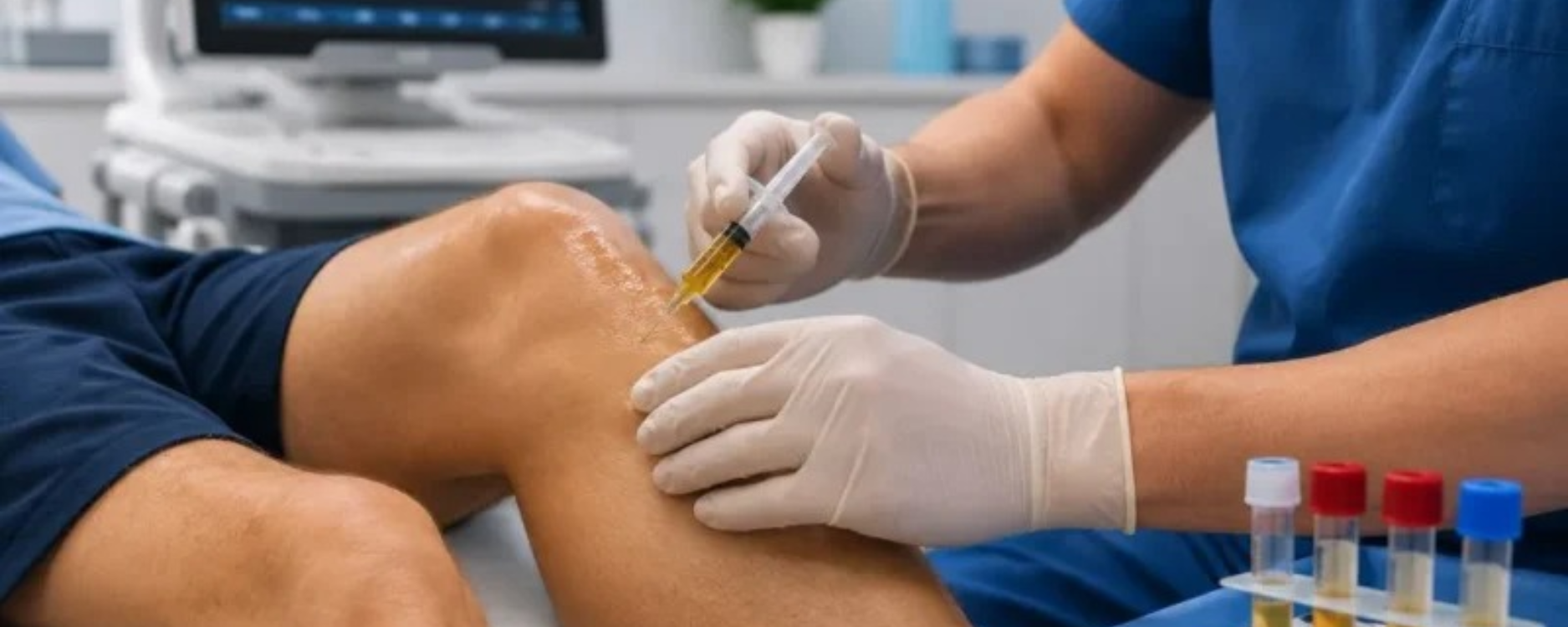
Image-guided injection into the affected joint or injured tissue.
-
Post-procedure monitoring and rehabilitation guidance.
The procedure is usually completed on a day-care basis with minimal downtime.
Recovery
-
Most patients return home the same day.
-
Mild soreness at the collection or injection site may occur for a few days.
-
Normal daily activities can often be resumed within a short period, as advised by the treating doctor.
-
Physical therapy may be recommended to optimize recovery.
-
Improvements are gradual and may continue over several weeks to months. Individual outcomes vary.
GFC (Growth Factor Concentrate) Therapy
What is GFC Therapy?
Growth Factor Concentrate (GFC) Therapy is an advanced regenerative treatment that uses growth factors prepared from the patient’s own blood. These growth factors help support tissue repair and healing while aiming to reduce inflammation.
Compared with conventional platelet preparations, GFC therapy is designed to deliver a concentrated preparation of growth factors for selected musculoskeletal conditions.
Indications
GFC Therapy may be recommended for:
Benefits
-
Uses the patient’s own blood
-
Minimally invasive procedure
-
May reduce pain and inflammation
-
Supports tissue healing
-
No hospital admission in most cases
-
Quick outpatient treatment
-
Short recovery period
Procedure
The treatment typically involves:
-
Clinical assessment by an orthopedic specialist.
-
Collection of a small sample of the patient’s blood.
-
Processing using a specialized GFC preparation system.
-
Separation and concentration of growth factors.
-
Image-guided injection into the affected area.
-
Observation before discharge.
The procedure generally takes 30–60 minutes.
Recovery
-
Patients usually return home on the same day.
-
Mild discomfort at the injection site is common for a short period.
-
Strenuous physical activities should be avoided for several days or as advised.
-
Rehabilitation exercises may be recommended.
-
Recovery timelines vary depending on the condition being treated.
PRP (Platelet-Rich Plasma) Therapy
What is PRP Therapy?
Platelet-Rich Plasma (PRP) Therapy is a regenerative treatment that uses a concentrated portion of the patient’s own blood containing platelets and naturally occurring growth factors. These growth factors help support the body’s healing processes in injured tissues.
PRP Therapy is widely used in orthopedics and sports medicine for selected tendon, ligament, muscle, and joint conditions.
Indications
PRP Therapy may be considered for:
-
Knee osteoarthritis
-
Shoulder injuries
-
Tennis elbow
-
Ligament injuries
-
Tendon injuries
-
Rotator cuff disorders
-
Achilles tendon injuries
-
Plantar fasciitis
-
Muscle injuries
-
Sports injuries
Benefits
-
Uses the patient’s own blood
-
Minimally invasive treatment
-
May reduce pain and inflammation
-
Supports natural tissue healing
-
Outpatient procedure with minimal downtime
-
Low risk of allergic reactions
-
May improve function in appropriately selected patients
Procedure
PRP Therapy generally includes:
-
Medical evaluation by an orthopedic specialist.
-
Collection of a small blood sample.
-
Processing the blood in a centrifuge to obtain platelet-rich plasma.
-
Injection of PRP into the affected area, often using ultrasound guidance for accuracy.
-
Post-treatment instructions and follow-up care.
The entire procedure usually takes less than one hour.
Recovery
-
Patients can usually return home immediately after treatment.
-
Mild pain or swelling at the injection site may occur temporarily.
-
Heavy exercise should be avoided for several days, as recommended by the treating physician.
-
A structured rehabilitation program may be advised.
-
Benefits may develop gradually over several weeks, with results varying from patient to patient.
Why Choose Guardian Hospital for Orthobiologics?
At Guardian Hospital, our Orthobiologics Department combines advanced regenerative medicine with experienced orthopedic specialists to provide personalized care. We focus on accurate diagnosis, image-guided procedures, evidence-based treatment planning, and comprehensive rehabilitation to help patients achieve the best possible outcomes.
Our Strengths
-
Experienced Orthopedic & Sports Medicine Specialists
-
Advanced Regenerative Medicine Techniques
-
Image-Guided Precision Injections
-
Personalized Treatment Plans
-
State-of-the-Art Infrastructure
-
Comprehensive Rehabilitation Support
-
Patient-Centered, Evidence-Based Care
Book Your Consultation
If you are experiencing persistent joint pain, tendon injuries, sports injuries, or early arthritis, consult the Orthobiologics specialists at Guardian Hospital to learn whether regenerative therapy may be an appropriate option for your condition.