

- October 15, 2026
- drishti gupta
- Comment: 0
- General Medicine
Introduction: When Google Becomes Your First Doctor
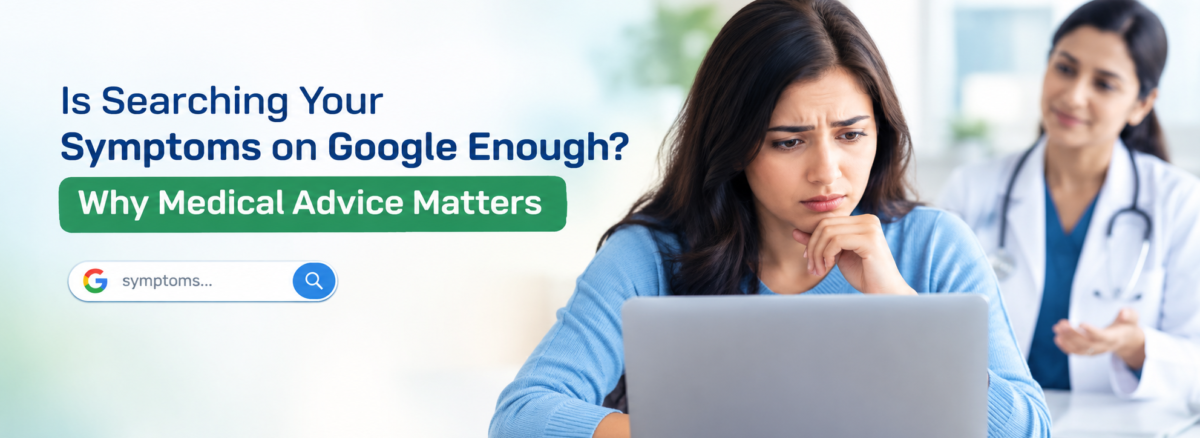
Have you ever experienced a headache, stomach pain, persistent cough, or unusual tiredness and immediately searched for your symptoms on Google?
You are not alone. Today, many people use the internet to understand their health problems before visiting a doctor. A quick search can provide useful health information, explain common symptoms, and help you prepare questions for a medical consultation.
However, searching for symptoms on Google is not the same as getting a medical diagnosis.
The same symptom can have several possible causes. For example, a headache may result from dehydration, stress, lack of sleep, or a medical condition that requires further evaluation. Reading online information cannot reliably determine which explanation applies to you.
Understanding the difference between general health information and professional medical advice can help you make safer decisions about your health.
1. Why Searching Symptoms on Google Can Be Misleading?
Google provides access to millions of health-related pages, but not every result is accurate, relevant, or appropriate for your individual situation.
Here are some common problems with self-diagnosis.
Similar symptoms can have different causes
Many health conditions share the same symptoms. Fatigue, for instance, may be associated with poor sleep, nutritional deficiencies, stress, or other medical conditions.
Without considering your medical history, physical examination, and other relevant findings, it can be difficult to identify the actual cause.
Online information may increase health anxiety
When you search for symptoms, you may come across descriptions of serious illnesses. This can create unnecessary fear, even when the symptom has a less serious explanation.
On the other hand, reading reassuring information online may cause you to underestimate a problem that needs medical attention.
Not all health websites are reliable
Some websites publish outdated information, oversimplify medical conditions, or promote unverified treatments. Following such advice without consulting a qualified healthcare professional can lead to inappropriate decisions.
Remember: Online searches can help you understand your symptoms, but they should not replace a proper medical evaluation.
2. Why Professional Medical Advice Matters
A qualified doctor does more than identify symptoms. They assess the complete picture of your health and help determine the next appropriate step.
Accurate evaluation of symptoms
During a medical consultation, a doctor may ask when your symptoms started, how frequently they occur, what makes them better or worse, and whether you have other health concerns.
This information helps the doctor decide whether you need an examination, laboratory tests, imaging, or another form of assessment.
Identifying the underlying cause
Treating a symptom without understanding its cause may provide temporary relief while the underlying problem remains unaddressed.
For example, recurring stomach discomfort may be related to diet, acidity, an infection, or another digestive condition. The right approach depends on the individual’s symptoms and clinical findings.
Personalized treatment recommendations
Medical advice is not the same for everyone. Age, medical history, current medicines, allergies, and other factors can influence treatment decisions.
A doctor can recommend an appropriate treatment plan, explain possible risks, and guide you on when follow-up care is needed.
Preventing delays in treatment
Some medical conditions benefit from early diagnosis and timely care. Consulting a healthcare professional when symptoms persist, worsen, or keep returning can help prevent avoidable delays in evaluation.
3. When Should You Consult a Doctor Instead of Relying on Google?
Not every symptom requires an emergency visit, but certain warning signs should never be ignored.
Consider consulting a doctor if you experience:
- Persistent symptoms: A cough, headache, fever, digestive problem, or unexplained fatigue that does not improve.
- Recurring health problems: Symptoms that disappear and return repeatedly.
- Unexplained changes: Unintentional weight loss, unusual weakness, or a noticeable change in your usual health.
- Symptoms affecting daily life: Pain, breathing difficulties, disturbed sleep, or problems carrying out routine activities.
- Concerns about medicines: Questions about dosage, side effects, drug interactions, or whether a medicine is suitable for you.
Seek emergency medical help immediately for warning signs such as severe breathing difficulty, chest pain, sudden weakness on one side of the body, or sudden difficulty speaking. Do not delay emergency care to search online.
4. Can Online Symptom Checkers Be Helpful?
Yes. Online symptom checkers and reliable health websites can be useful when used responsibly.
They may help you learn basic medical terminology, understand common causes of symptoms, and prepare for an appointment. However, their suggestions are not a confirmed diagnosis and may not account for all your individual risk factors.
To use online health information safely:
- Choose trustworthy websites with identifiable medical authors or qualified reviewers.
- Check when the information was published or last updated.
- Be cautious of websites promising guaranteed cures or recommending medicines without adequate assessment.
- Avoid starting, stopping, or changing prescribed medication based solely on online advice.
- Discuss information you find online with your doctor before making important healthcare decisions.
Reliable health information should support informed conversations with healthcare professionals, not replace
5. Google Search vs. Professional Medical Consultation
| Google Search | Professional Medical Advice |
| Provides general health information | Evaluates your individual health concerns |
| Lists several possible causes | Assesses which causes are relevant to your symptoms |
| Cannot perform a physical examination | Can examine you and recommend appropriate investigations |
| May not account for your medical history | Consider your medical history, medicines, and risk factors |
| Offers information to explore | Provides guidance for diagnosis, treatment, and follow-up |
Both can have a role in your healthcare journey. The important difference is that online information offers general knowledge, whereas a medical consultation helps you make decisions based on your specific health needs.
6. How to Prepare for a Doctor’s Appointment
You can make your medical consultation more productive by preparing a few details in advance.
- Write down your symptoms and when they begin.
- Note how often the symptoms occur and whether they are getting worse.
- Bring details of your current medicines and any known allergies.
- Carry previous medical reports or test results, if available.
- Mention any health information you find online and ask your doctor whether it applies to your situation.
These simple steps can help your doctor understand your concerns and plan the next steps more effectively.
7. Why Choosing the Right Hospital Matters
When you have a health concern, access to appropriate medical evaluation is an important part of getting the care you need. Choosing a hospital with relevant medical specialties and diagnostic facilities can help you navigate your healthcare journey.
At Guardian Hospital, Ambala, patients can seek medical evaluation and guidance for a range of health concerns across multiple specialties. Depending on the symptoms and clinical assessment, the appropriate specialist can help determine the next steps for investigation, treatment, or follow-up.
Whether you are experiencing persistent discomfort, recurring symptoms, or a new health concern, seeking professional medical guidance is a sensible step towards informed healthcare decisions.
Learn more about the medical services available at Guardian Hospital.
Frequently Asked Questions (FAQs)
1. Is searching for symptoms on Google reliable?
Google can help you find general health information, but it cannot confirm the cause of your symptoms. Always consult a qualified healthcare professional when you need an individual assessment or treatment advice.
2. Can Google diagnose a medical condition?
No. Search results may describe possible causes of symptoms, but they cannot replace a clinical assessment with a qualified healthcare professional.
3. Why is consulting a doctor important even if symptoms seem minor?
Some conditions begin with mild or nonspecific symptoms. A doctor can assess your concerns, consider relevant risk factors, and determine whether further investigation is necessary.
4. Should I visit a doctor if my symptoms keep returning?
Yes. Recurring symptoms deserve medical evaluation, particularly if they become more frequent, worsen over time, or interfere with everyday activities.
5. Can I use online health information before visiting a hospital?
Yes. Use reliable sources to understand basic health information and prepare questions. Avoid self-diagnosis and do not change prescribed medication without appropriate medical guidance.
6. When should I seek emergency medical care?
Seeking immediate emergency help for symptoms such as severe breathing difficulty, chest pain, sudden facial drooping, sudden weakness, or difficulty speaking. Do not wait for an online search or a routine appointment.
Conclusion: Your Health Deserves More Than a Google Search
Searching for symptoms online is easy, but understanding what those symptoms mean requires the right medical context. Reliable online information can help you become more aware of your health, while professional medical advice helps guide appropriate evaluation and treatment.
Instead of relying entirely on search results or attempting to diagnose yourself, pay attention to your symptoms, seek reliable information, and consult a qualified doctor when needed.
Your health is too important to leave to guesswork. Make informed decisions and seek medical advice when it matters.
For medical evaluation and guidance, contact Guardian Hospital, Ambala, or consult an appropriate healthcare professional.

Leave feedback about this