

- October 16, 2026
- drishti gupta
- Comment: 0
- Knee Replacement
Knee pain can make even simple activities, such as walking, climbing stairs, sitting comfortably, or getting out of bed, difficult. For people with severe knee arthritis, knee replacement surgery can help reduce pain and improve mobility when other treatments are no longer effective.
One of the most common questions patients ask before surgery is: “How soon can I walk after knee replacement surgery?”
The good news is that many patients can stand and take their first steps with assistance on the same day as surgery or within 24 hours, depending on their medical condition, surgical recovery, and the advice of their healthcare team.
However, walking independently, climbing stairs, returning to daily activities, and achieving full recovery take more time.
In this blog, we explain the knee replacement recovery timeline month by month, what you can expect at each stage, and answers to the questions patients frequently ask.
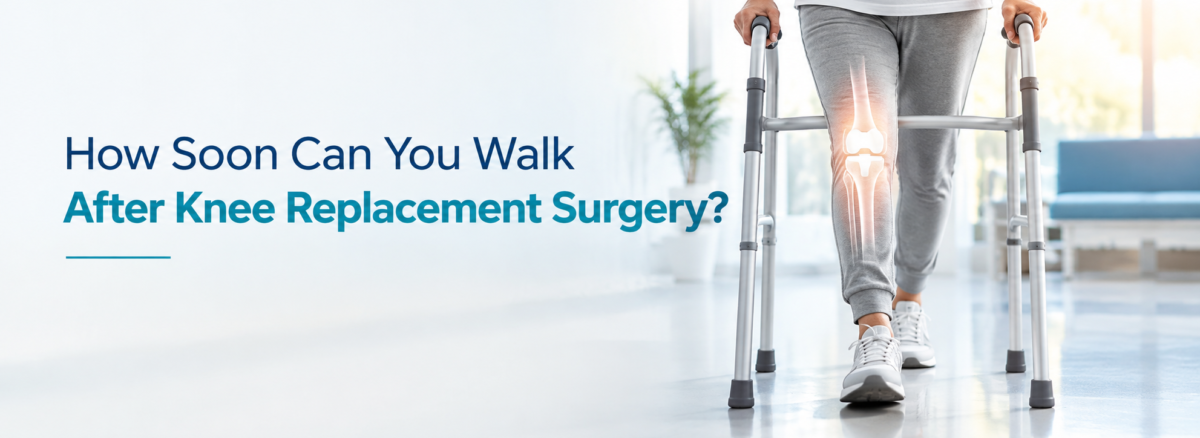
How Soon Can You Walk After Knee Replacement Surgery?
Most patients begin walking with the help of a walker and a physiotherapist within the first 24 hours after surgery, if medically appropriate.
Recovery varies from person to person. Your age, general health, muscle strength, knee condition before surgery, and consistency with physiotherapy can all affect how quickly you regain mobility.
Month-Wise Recovery After Knee Replacement Surgery
Month 1: Learning to Walk Again
During the first month, the focus is on safe walking, controlling swelling, managing pain, and improving knee bending and straightening.
What you may experience:
- Walking short distances with a walker or other prescribed support.
- Gradually improving ability to get in and out of bed or a chair.
- Practicing prescribed knee exercises.
- Continuing to experience some swelling, stiffness, and discomfort.
Month 2: Improving Strength and Mobility
Many patients begin to feel more confident while walking and performing everyday activities during this stage.
What you may experience:
- Gradually increasing walking distance.
- Better knee movement and leg strength.
- Practicing stairs with appropriate support.
- Reducing reliance on a walker when your physiotherapist confirms it is safe.
Month 3: Returning to Everyday Activities
By the third month, many patients have made noticeable progress, although recovery speed varies.
What you may experience:
- Walking more comfortably on level surfaces.
- Improved confidence with routine household activities.
- Better muscle control and balance.
- Continuing exercises to improve knee flexibility.
Months 4–6: Building Strength and Endurance
At this stage, many patients continue to gain strength, stamina, and confidence.
What you may experience:
- Walking for longer periods is tolerated.
- Improved performance of routine activities.
- Progress with strengthening and balance exercises.
- Less difficulty with some movements that were previously painful.
Months 6–12: Long-Term Recovery
Some patients continue to improve for 6–12 months or longer, especially in strength, comfort, and overall function
What you may experience:
- Greater confidence in everyday walking.
- Improved endurance and muscle strength.
- Continued improvement in knee comfort and function.
Remember: These milestones are approximate. Do not compare your recovery with another patient’s timeline or force your knee to meet a particular deadline.
What Factors Affect Recovery After Knee Replacement?
Not every patient recovers at the same speed. The following factors can influence recovery:
- Age and general health: Overall fitness and other medical conditions can affect rehabilitation.
- Knee condition before surgery: Severe stiffness or muscle weakness may make rehabilitation more challenging.
- Physiotherapy: Following a prescribed exercise program helps to improve strength and movement.
- Pain and swelling management: Appropriate medication, rest, and elevation can support recovery.
- Home support: A safe environment and help with daily activities can reduce the risk of falls.
- Surgical and rehabilitation plan: The type of procedure and individual medical needs affect the recovery pathway.
A personalized rehabilitation plan is more important than trying to recover within a fixed number of days.
Frequently Asked Questions About Knee Replacement Recovery
1. Can I walk on the same day after knee replacement surgery?
Yes. Many patients can stand and take their first assisted steps on the day of surgery or within 24 hours, once their medical team confirms it is safe. A walker or other support may be required initially.
2. How long will I need a walker after knee replacement?
Some patients need a walker for a few weeks, while others require support for longer. You should switch to a cane or walk independently only when your surgeon or physiotherapist confirms that your strength and balance are sufficient.
3. When can I climb stairs after knee replacement?
Many patients begin practicing stairs with supervision during their early recovery. Use a handrail and the recommended walking aid. Your physiotherapist will teach you the safest technique for your condition.
4. Is pain normal after knee replacement surgery?
Some pain, stiffness, and swelling are common in the initial weeks and should generally improve over time. Follow your prescribed pain-management plan. Seek medical advice if pain becomes severe or suddenly worsens.
5. When can I walk without support?
Some patients gradually stop using walking aids within several weeks, while others need them longer. Do not stop using support if you are limping, feeling unsteady, or at risk of falling.
When Should You Consult an Orthopedic Specialist?
You should consider an orthopedic evaluation if persistent knee pain, stiffness, or swelling limits your walking, sleep, or daily activities.
Knee replacement is not necessary for every person with knee pain. Depending on the cause and severity, treatment may include medication, lifestyle changes, physiotherapy, or other appropriate options. Surgery may be considered when severe joint damage continues to affect quality of life despite suitable non-surgical treatment.
An orthopedic specialist can assess your knee, review your investigations, and discuss the most appropriate treatment options.
Knee Replacement Care at Guardian Hospital, Ambala
At Guardian Hospital, Ambala, patients can consult the orthopedics and joint replacement team for assessment of knee pain, treatment planning, and guidance on post-surgical rehabilitation.
The aim of recovery is not simply to start walking; it is to help you regain safe movement, improve daily function, and return to activities with greater confidence.
If knee pain is affecting your quality of life, consult an orthopedic specialist to understand your treatment options.
Reviewed by: Dr. Karan Sobti (Robotic Knee Replacement Surgeon )

Leave feedback about this