

- September 9, 2026
- drishti gupta
- Comment: 0
- psychiatrist
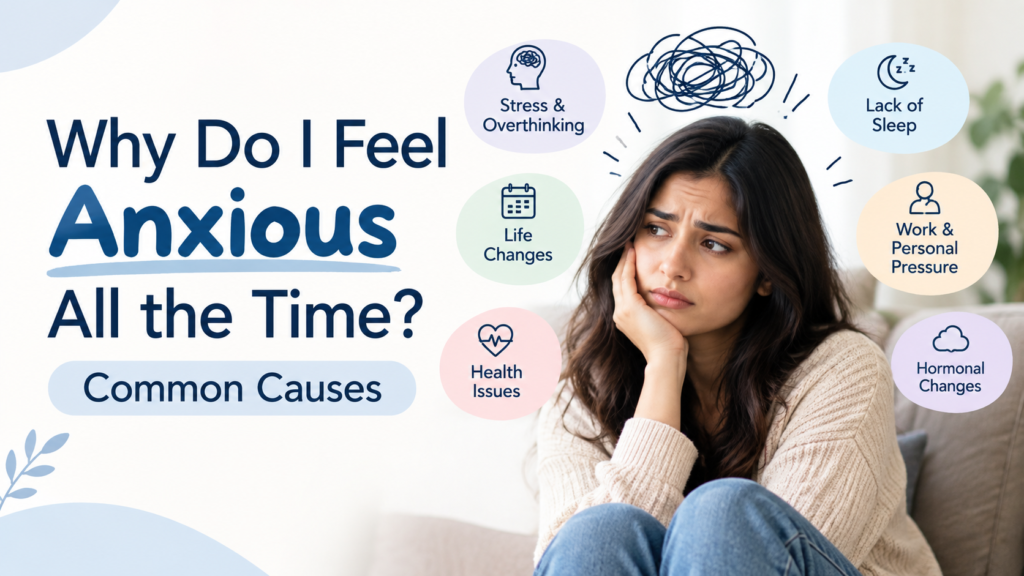
Feeling anxious from time to time is a normal response to stress. But when you feel worried, restless, tense, or on edge most of the time, it may start affecting your sleep, concentration, relationships, work, and everyday life.
Persistent anxiety can have many possible causes. Understanding what may be behind it is an important first step toward getting the right support and treatment.
What Is Anxiety?
Anxiety is the body’s natural response to perceived stress or danger. It can trigger both emotional and physical symptoms, such as:
-
- Constant worrying or overthinking
-
- Restlessness or feeling constantly “on edge”
-
- Difficulty concentrating
-
- Irritability
-
- Trouble falling or staying asleep
-
- Fast heartbeat or palpitations
-
- Sweating or trembling
-
- Muscle tension
-
- Stomach discomfort
-
- Feeling short of breath
Occasional anxiety is common. However, anxiety that is persistent, difficult to control, or interfering with daily life deserves attention.
Why Do I Feel Anxious All the Time?
There isn’t always one single reason. Common causes and contributing factors include:
1. Ongoing Stress
Work pressure, financial concerns, relationship problems, academic demands, family responsibilities, or major life changes can keep your body’s stress response activated.When stress continues for a long time, you may begin to feel anxious even when there is no immediate threat.
2. Excessive Worry and Overthinking
Constantly thinking about “what if” situations can create a cycle of worry.
For example, worrying about your health may lead you to notice every small physical sensation, which can create more fear and even more anxiety.
3. Lack of Sleep
Poor or insufficient sleep can affect mood, concentration, and the body’s ability to cope with stress. Anxiety can also make it harder to sleep, creating a cycle where anxiety affects sleep and poor sleep makes anxiety feel worse.
4. Too Much Caffeine
Coffee, tea, energy drinks, and other caffeinated beverages can cause symptoms such as increased heart rate, restlessness, and difficulty sleeping. For some people, consuming too much caffeine may make anxiety symptoms more noticeable.
5. Certain Medications or Substances
Some medicines, stimulants, alcohol, and other substances can contribute to anxiety symptoms or make existing symptoms worse. If you notice anxiety after starting a medication or changing your dose, speak with your doctor rather than stopping the medication on your own.
6. Anxiety Disorders
Persistent anxiety can sometimes be related to an anxiety disorder, such as:
-
- Generalized anxiety disorder (GAD)
-
- Panic disorder
-
- Social anxiety disorder
-
- Specific phobias
-
- Separation anxiety disorder
Each condition has different symptoms and treatment approaches, so a professional assessment can help identify what is happening.
7. Other Health Conditions
Some physical health conditions can cause symptoms that resemble anxiety, including certain thyroid problems, heart conditions, respiratory problems, and blood-sugar abnormalities.
This is why persistent or unexplained anxiety should not always be assumed to be “just stress.”
When Should You See a doctor?
Consider speaking with a doctor or mental-health professional if:
-
- You feel anxious most days
-
- Worrying is difficult to control
-
- Anxiety is affecting your work, studies, relationships, or daily activities
-
- You are avoiding places or situations because of fear
-
- You regularly experience panic-like symptoms
-
- Your sleep is significantly affected
-
- You are using alcohol or other substances to cope with anxiety
-
- Your symptoms are new, severe, or unexplained
A healthcare professional can assess your symptoms, look for possible contributing factors, and recommend appropriate treatment or support.
Can Anxiety Be Treated?
Yes. Anxiety is treatable, and the right approach depends on the cause, severity, symptoms, and individual needs.
What Can You Do to Reduce Anxiety?
Along with professional care when needed, some healthy habits may help manage anxiety:
-
- Maintain a regular sleep schedule
-
- Reduce excessive caffeine
-
- Stay physically active
-
- Eat regular, balanced meals
-
- Practice slow breathing or relaxation exercises
-
- Take breaks from constant news and social-media consumption
-
- Make time for enjoyable activities
-
- Talk to someone you trust
-
- Avoid relying on alcohol or other substances to manage anxiety
These steps may help, but they are not a substitute for professional treatment when anxiety is persistent or significantly affecting your life.
Frequently Asked Questions
Is it normal to feel anxious every day?
Occasional anxiety is common, but feeling anxious nearly every day, especially when it is difficult to control or interfere with daily life—may indicate a problem that deserves professional evaluation.
Why do I feel anxious for no reason?
Sometimes anxiety can occur without an obvious immediate trigger. Stress, sleep problems, caffeine, certain medications, mental-health conditions, or underlying physical health problems can contribute.
Can lack of sleep cause anxiety?
Poor sleep can make it harder to manage stress and may worsen feelings of anxiety. At the same time, anxiety itself can interfere with sleep.
Should I see a psychiatrist ?
If anxiety is persistent, severe, difficult to manage, or affecting your daily life, speaking with a mental-health professional can be helpful.
Final Thoughts
Feeling anxious all the time is not something you simply have to live with. Anxiety can have many causes, and identifying the underlying factors can help you receive appropriate support.
If persistent worry, fear, or physical symptoms are affecting your everyday life, consider talking to a qualified healthcare professional. Early support can make anxiety easier to understand and manage.
Don’t Ignore Constant Anxiety
Understand the cause. Get the right support. Take the first step toward better mental well-being.
Reviewed by Dr. Tanuj Singla
MBBS, MD (Psychiatry)

Leave feedback about this